What Is Green Amethyst?
Green amethyst is best understood as prasiolite: a pale green quartz gemstone whose market identity is closely tied to treatment and trade terminology.
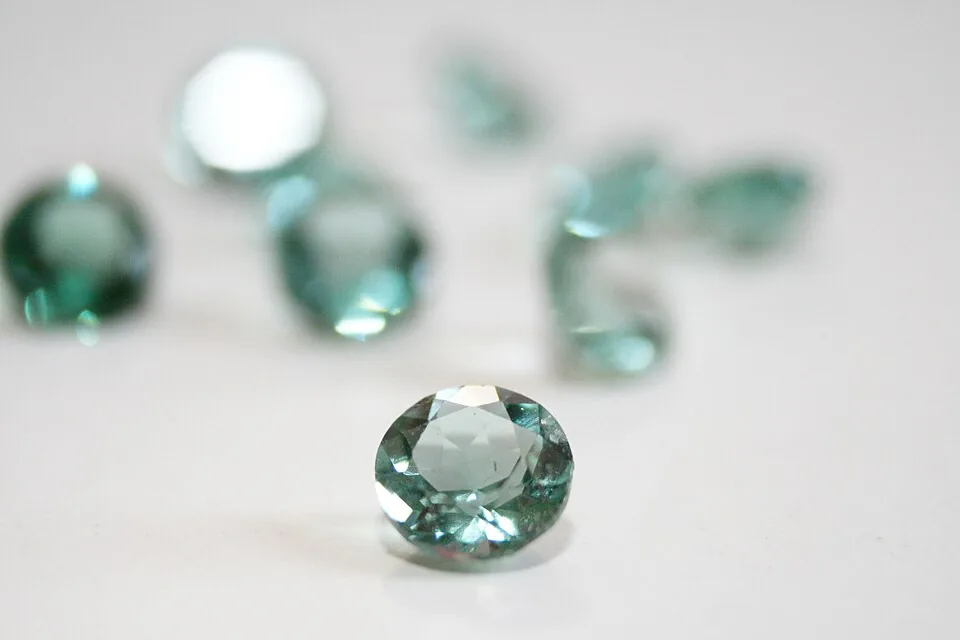
Green amethyst is the trade name commonly used for prasiolite, a transparent green variety of quartz; most commercial material is treated.
- Prasiolite is a transparent green variety of quartz.
- Most material sold commercially obtains its green color through heat treatment or irradiation.
- “Green amethyst” is a familiar trade phrase, but prasiolite is the clearer gemological term.
- Its hardness of about 7 makes it suitable for many jewelry uses, though edges can still chip.
The basics
Prasiolite belongs to the quartz family, the same mineral family as amethyst, citrine, smoky quartz, and rock crystal. Its defining appearance is a transparent yellow-green to pale leek-green color. The color is usually subtle rather than emerald-like.
The phrase “green amethyst” is widely used in jewelry retail because much commercial prasiolite begins as amethyst and is changed by treatment. It is easy for shoppers to understand, but it can blur the distinction between the purple quartz variety called amethyst and the green material called prasiolite.
What to know about treatments
Most prasiolite available in jewelry is treated. Certain amethyst can turn green when carefully heated, while some colorless or yellowish quartz can be irradiated to create green. Natural green prasiolite is reported, but it is uncommon.
What good prasiolite looks like
Look for a pleasing green tone, good transparency, a cut that returns light evenly, and a setting that protects vulnerable corners. Very pale color is normal. A stone should not need to resemble emerald to be attractive.
Common questions
Is green amethyst real?
Yes, the gemstone is real quartz. The name is commercial terminology; the more precise name is prasiolite.
Is it rare?
Naturally occurring prasiolite is rare, but most stones in the market are treated and should not be priced as exceptionally rare natural material without strong evidence.
Green amethyst at a glance
For most shoppers, the easiest way to understand green amethyst is to separate the mineral, the colour name, and the treatment history. They are related, but they are not the same thing.
| Question | Plain answer |
|---|---|
| What mineral is it? | Quartz (SiO₂). |
| What is the green variety called? | Prasiolite is the common gem/trade name for transparent green quartz. |
| Why is “green amethyst” used? | It is a familiar retail name, especially because some commercial material starts as amethyst before treatment. |
| Is the stone itself real? | Yes. Treated prasiolite is still real quartz; treatment describes how the colour was produced or changed. |
| Is natural green quartz possible? | Yes, but documented natural occurrences are uncommon compared with treated commercial material. |
| Mohs hardness | About 7 for quartz. That gives useful scratch resistance, but it does not make the stone immune to chips or hard knocks. |