Green Amethyst Quality and Value
The best prasiolite is not necessarily the darkest or largest. It is the stone whose color, transparency, cut, and setting work together beautifully.
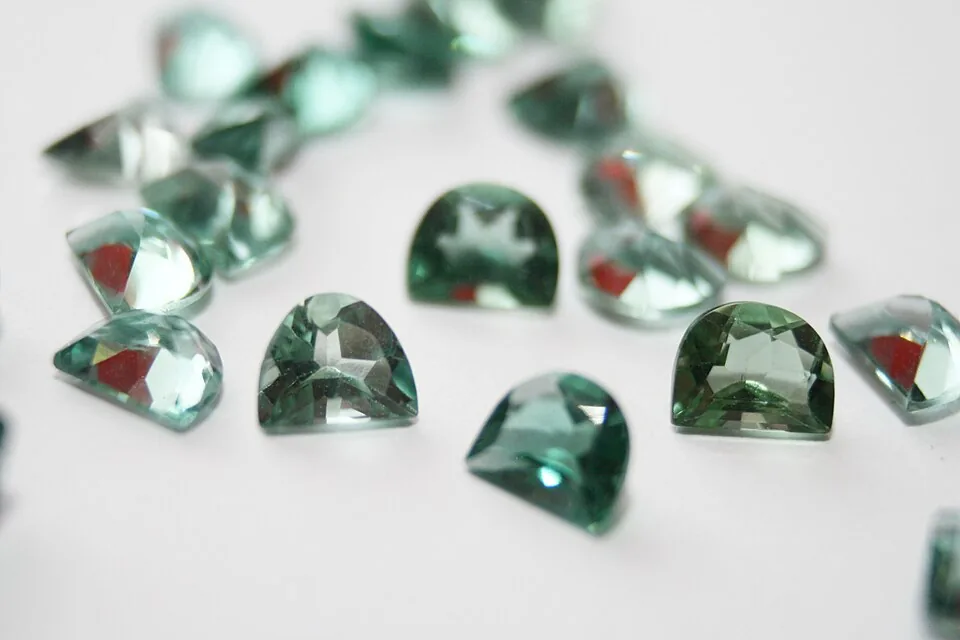
Prasiolite value depends on beauty, cut, transparency, size, treatment disclosure, craftsmanship, and documentation—not the name alone.
- Prasiolite value is driven mainly by visible beauty, cut, size, clarity, setting, and seller transparency.
- Pale color is normal; deeper is not always better.
- Large quartz gems can be affordable because quartz is widely available.
- Claims of untreated natural origin require evidence if they create a large premium.
Color and transparency
Attractive prasiolite commonly ranges from very pale mint to yellowish or leek green. Even color and lively transparency are generally more desirable than darkness alone.
Cut quality
Because pale stones rely on light performance, cutting matters greatly. A well-cut stone appears balanced and bright. A poorly proportioned stone may show a transparent “window” through the center or dark, inactive areas.
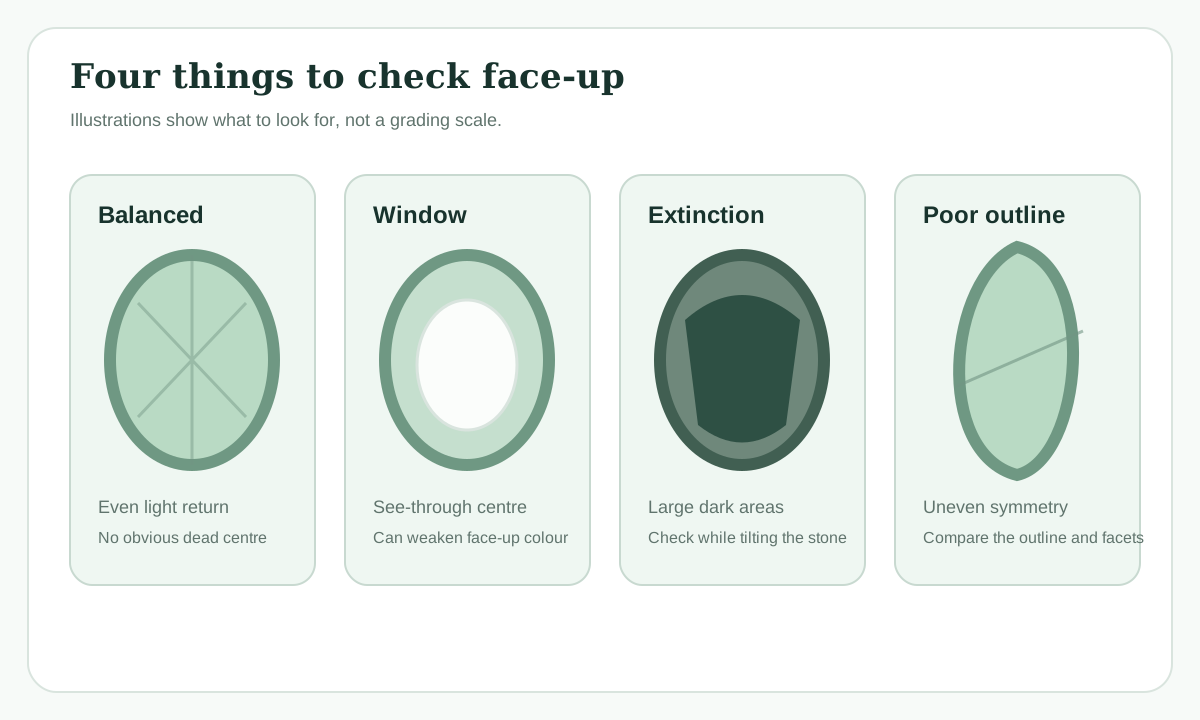
What cut problems look like
What affects price most
Loose-stone size, precision of cutting, jewelry metal, craftsmanship, brand, and any credible documentation all affect price. In finished jewelry, the setting may contribute more to cost than the stone itself.
Is green amethyst valuable?
It can be beautiful and commercially valuable, but ordinary treated prasiolite is generally an accessible gemstone rather than an ultra-rare investment stone. Buy it primarily for appearance and enjoyment.
A practical quality check
Quality is easier to judge when you look at the stone in a fixed order instead of chasing one “best” grade.
| Check | Better sign | Watch for |
|---|---|---|
| Colour | A green tone you actually like, seen in more than one lighting condition. | Colour that only looks attractive under one seller photograph or strongly edited lighting. |
| Transparency | Clean, open appearance without distracting visible inclusions. | Cloudiness or fractures that noticeably interrupt the face-up view. |
| Cut | Even brightness and balanced proportions. | A large see-through centre (“window”) or very dark dead areas. |
| Finish | Clean facet junctions and a good polish. | Obvious abrasions, chips, or poorly finished facet edges. |
| Setting | Secure prongs/bezel and protection for vulnerable corners. | Loose stone movement or exposed sharp corners on a frequently worn ring. |
| Disclosure | Clear treatment wording and realistic seller claims. | A large “rare natural” premium with no supporting evidence. |