Prasiolite vs. Other Green Gemstones
Many stones can be green. Color is only the beginning; mineral identity, transparency, durability, treatment, and value can differ substantially.
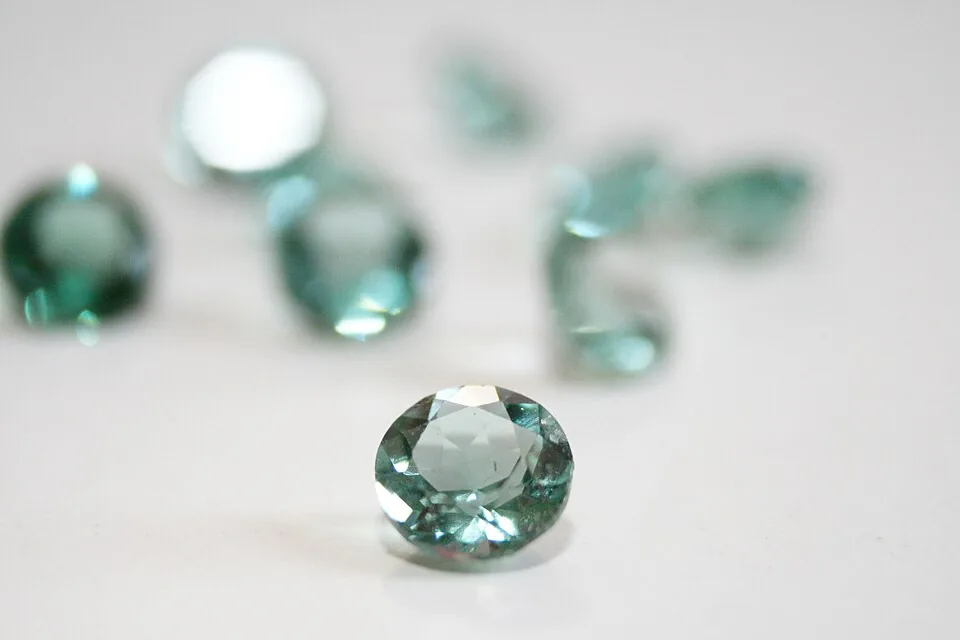
Prasiolite is green quartz and differs mineralogically from peridot, emerald, chrysoprase, green glass, and other green materials.
- Prasiolite is quartz, not beryl like emerald and not olivine like peridot.
- Its color is usually softer and more grayish or yellowish than emerald.
- It is harder than some green gems but less hard than sapphire.
- Identity should be based on gemological properties, not color alone.
Prasiolite vs. peridot
Peridot is the gem variety of olivine and often has a brighter yellow-green appearance. Prasiolite is quartz and commonly appears paler and cooler. Their refractive behavior and inclusions also differ.
Prasiolite vs. emerald
Emerald is green beryl. Fine emerald can have much richer saturation and substantially higher value, but it is also commonly included and often treated with oils or resins. Prasiolite is typically clearer, lighter, and much less costly.
Prasiolite vs. chrysoprase and green glass
Chrysoprase is a translucent chalcedony colored by nickel and usually has a more solid, glowing appearance. Green glass may imitate color and transparency but will not share quartz’s full set of physical and optical properties.
Can you identify prasiolite from a photo?
No. A photo can suggest possibilities, but reliable identification may require magnification, refractive index testing, spectroscopy, or other gemological methods.
Sources
Quick comparison: green amethyst and common green alternatives
| Gem | Typical look | Mohs hardness | Why someone may choose it |
|---|---|---|---|
| Prasiolite / green amethyst | Pale, transparent yellow-green to leek-green | About 7 | Soft colour, large transparent stones, generally approachable pricing. |
| Emerald | Usually more saturated green; inclusions are common | About 7.5–8 | Classic saturated green and strong gem identity, often at a much higher price. |
| Peridot | Yellow-green to olive-green | About 6.5–7 | Distinct natural green colour with a warmer look. |
| Green tourmaline | Wide range from pale to deep green | About 7–7.5 | Broader colour range and often stronger saturation. |
Hardness numbers are useful for scratch resistance, but they do not rank overall toughness or guarantee that a gemstone cannot chip.